


Description
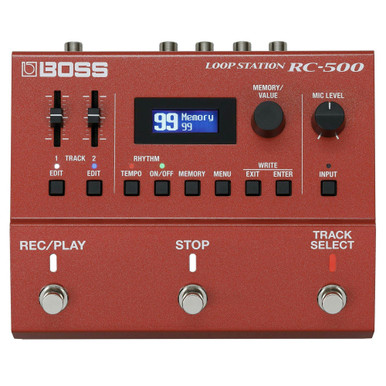
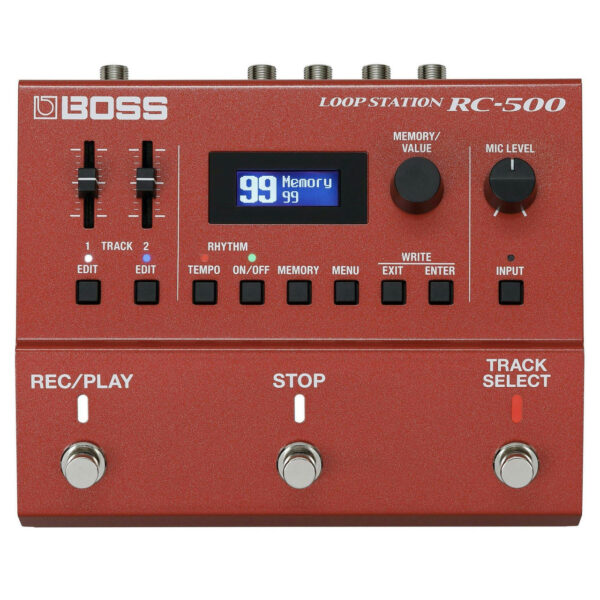
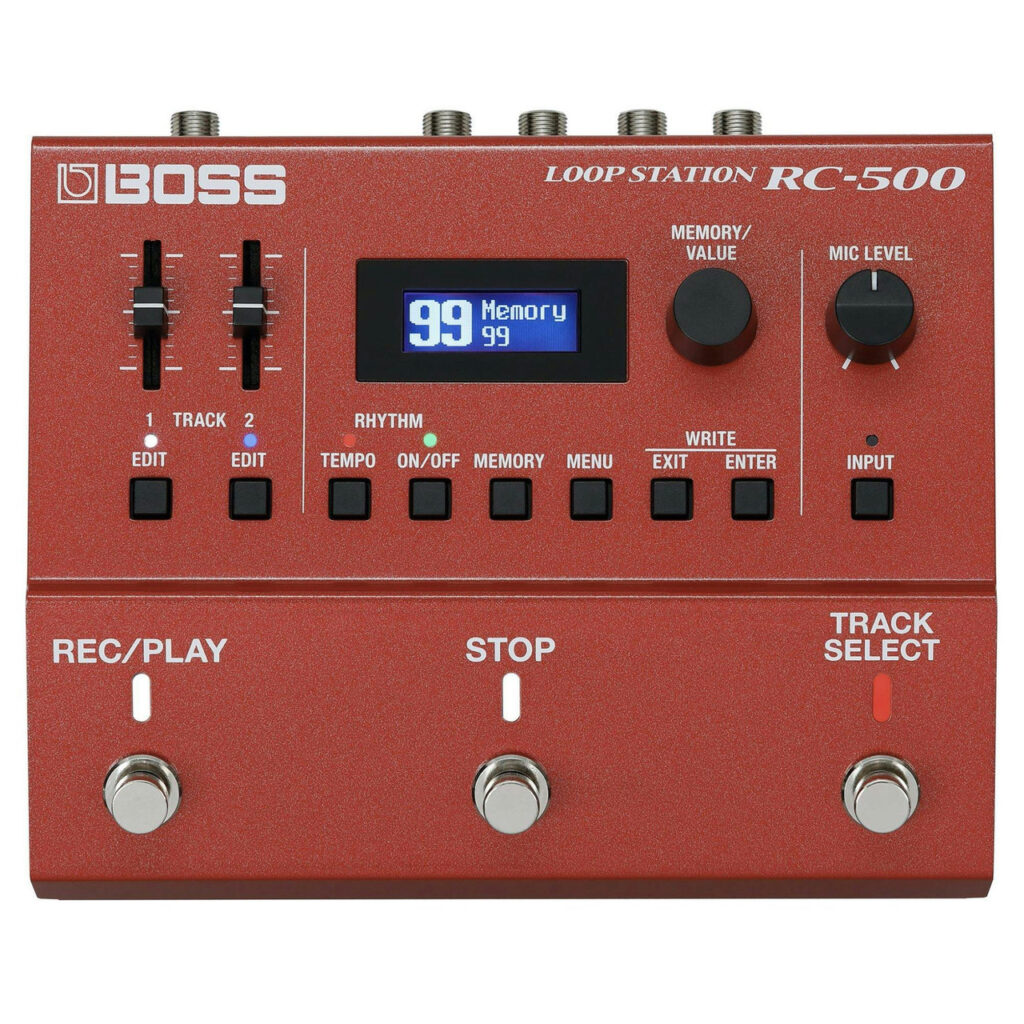
The RC-500 sets a new standard in compact looping. Expanding BOSS’ venerable Loop Station series, the RC-500 is one of the Japanese brand’s most feature-packed looper pedals to date. An essential partner for guitarists, singer-songwriters, multi-instrumentalists and anyone who wants to take their performing to the next level – the BOSS RC-500 is among the most versatile and best bang-for-your-buck loopers available on the market!Allowing you to form real-time compositions with two loop tracks, mic and stereo instrument inputs, 57 built-in rhythms and inspiring Loop FX – the RC-500 pedal doesn’t let the quality of your recordings slip either, with sublime 32-bit audio quality. Store your favourite loops via 99 generous built-in memory slots, and explore extended operation with external controls and MIDI.Unparalleled Audio QualityBOSS’ RC-500 has been designed with only the best circuity and components available – meaning virtually zero sonic compromises. Featuring best-in-class 32-bit AD/DA and 32-bit floating-point processing, the RC-500 captures your personal sound with full fidelity and keeps loops crystal-clear – even with multiple overdubs. And with 13 hours of stereo recording time, there’s plenty of space for extended and immersive musical journeys!Connect, Loop & MixWith its easy-to-use interface and multiple ins/outs, the BOSS RC-500 lets your creativity flow with no limitations. Connect mono/stereo instruments and pedal effects, plus a microphone to the dedicated XLR input – complete with phantom power for use with condenser microphones.You have the ability to use the two loop tracks independently for song-style composition, or together to form rich multi-track textures and soundscapes. The intuitive LCD backlight changes colour to clearly show the current operation mode, while tactile track faders and a mic level knob provide direct access to volume control as you loop. Simple!Expanded ControlAdhering to BOSS’ 500 series chassis design, the RC-500 boasts three footswitches that make it simple to control recording and playback, track switching and more. To get the absolute most out of the RC-500, you can connect up to two external footswitches for direct control of many assignable functions, or an expression pedal for continuous adjustments. And for advanced rigs, the space-saving TRS MIDI input/output enables remote operation from MIDI switchers and foot controllers, plus MIDI sync with drum machines and DAWs.Looping, Personalised…The RC-500’s ins/outs and footswitches are factory-configured for basic operation, but you can customise what they do to suit your personal looping preferences – reassigning them in a variety of different ways. Route left/right input sources to separate tracks, or send guitar and vocals to independent outputs. Use the footswitches to turn effects on/off, start/stop rhythms and more. Custom assignments are saved along with phrase memories, letting you instantly reconfigure the RC-500 for any application.Enhance Performances with Rhythms & Loop FXBOSS’ RC-500 will always keep you inspired with its built-in rhythms and evocative loop processing – designed to bring groove and colour to your looping. Each of the 57 preset rhythms include A/B variations, while 16 different drum kits provide sounds to match any musical style. Optimised for live performance, ‘Loop FX’ like repeat, scatter, and more infuse your loops with instant sonic energy. There’s a cool reverse function too – perfect for creating warped-sounding loops on-the-fly.Capture, Practice & Perform99 phrase memories enable you to store loops as fast as you create them, complete with rhythm and kit selections, audio settings, and control assignments. Loop audio can be backed up to a computer via USB, in case you want to overwrite ideas on the RC-500 without losing them forever! And…