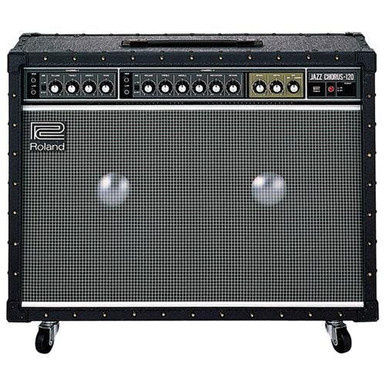
Roland JC120 Jazz Chorus Guitar Amplifier

As an affiliate partner, we may earn a small commission when you buy through our links — at no extra cost to you.

£1,349.00

This is the Roland JC120 Jazz Chorus Guitar Amplifier from Roland, listed in Guitar Pedals on guitars pedals amps and stuff.. Read More below.

Description

Roland JC120 Jazz Chorus Guitar Amplifier

A classic Jazz amplifier for the modern age, the Roland JC120 uses two amps to give you a classic chorus effect in full stereo. A lush and soft, yet powerful sound that will fill the room! Add to this a Spring Reverb, Distortion, Two channels each with their own EQ, volume, and High/Low Z inputs, and you have a feature packed professional amplifier with a great classic tone!

Here's what Roland say about the JC120

Celebrating Three Decades of a Classic

In 1975, Roland welcomed the arrival of the first JC-120. A revolution in guitar amplifier technology, the JC-120 Jazz Chorus; looked and sounded like no other amp. Thirty years later, the JC-120 remains in high demand by guitarists around the world. Unchanged from its original specification, the JC had attained legendary status by amp connoisseurs the world over. Now this rich heritage can be found in Roland's full line of guitar and bass amplifiers – from the CUBE- to the AC- and D-Bass series.

Features

  • The Classic and most popular “JC” since 1975
  • 60W + 60W (RMS) / 12” x 2 speakers
  • Distinctive “JC” stereo chorus
  • Vibrato with rate and depth control
  • Two input channels (normal/effect); 3-band EQ per channel
  • Stereo effect loop
  • Three footswitch jacks for chorus/vibrato, reverb and distortion
About the manufacturer

Roland

Roland are known for making standout effects pedals and more. Founded with a passion for tone and innovation, their gear has shaped countless records and players’ sounds. Look out for their iconic designs and flagship models — they’ve earned a reputation for reliability and creativity.

More info about this Product

Distortion Pedals

Guitar Pedals

Guitar pedals are compact effects units that shape and enhance a guitar’s sound, sitting between the instrument and the amplifier. They include gain pedals like overdrive and distortion, modulation effects such as chorus and tremolo, time-based effects like delay and reverb, and essential utilities including tuners, compressors and loopers. Understanding basic things such as pedal type, signal order, power requirements and intended use helps players choose pedals that suit their style, setup and playing environment.

More Gear like this

Chorus

Chorus is a modulation effect that thickens and widens a sound by duplicating the signal, slightly detuning it, and modulating its pitch over time. This creates the impression of multiple instruments playing together, resulting in a rich, shimmering, and spacious tone.

It is commonly used on guitar, bass, and keyboards to add movement and depth, working especially well with clean or lightly driven sounds. Chorus became strongly associated with 1980s music but remains widely used across pop, rock, ambient, and modern styles for its ability to make a sound feel fuller and more animated.

Distortion

Distortion pedals deliver the raw, aggressive edge that defines rock and metal, transforming your clean tone into something powerful and full of attitude. By pushing your signal into rich harmonic saturation, they create thick, sustaining sounds that cut through any mix. From classic crunchy riffs to high-gain modern mayhem, distortion pedals give you total control over how wild or tight your tone gets. Whether you’re crafting searing leads or heavy rhythm walls, they’re an essential tool for adding energy, bite, and character to your playing.

Guitar Pedal

Reverb

Reverb (short for reverberation) is an audio effect that simulates the natural reflections of sound in a physical space. When you play in a room, hall, or cathedral, the sound waves bounce off the walls, ceiling, and floor, creating a sense of depth and ambience. Reverb pedals and processors recreate this effect electronically, allowing guitarists and producers to shape how “big” or “live” their sound feels. From short, springy echoes that mimic vintage amp tanks to lush, atmospheric washes used in ambient or shoegaze music, reverb adds dimension and realism — turning a dry, flat tone into something immersive and expressive.