About the manufacturer
Rowin is represented on GPAS by compact guitar accessories and utility pedals, including isolated-output power supplies, a mini chromatic tuner and an acoustic simulator. The products suit players building a small board or adding a specific function without using much space. Compare output voltage and current, isolation, polarity, tuner display, simulator controls, switching and connector format, because similarly named Rowin products can serve very different jobs.
More info about this Product
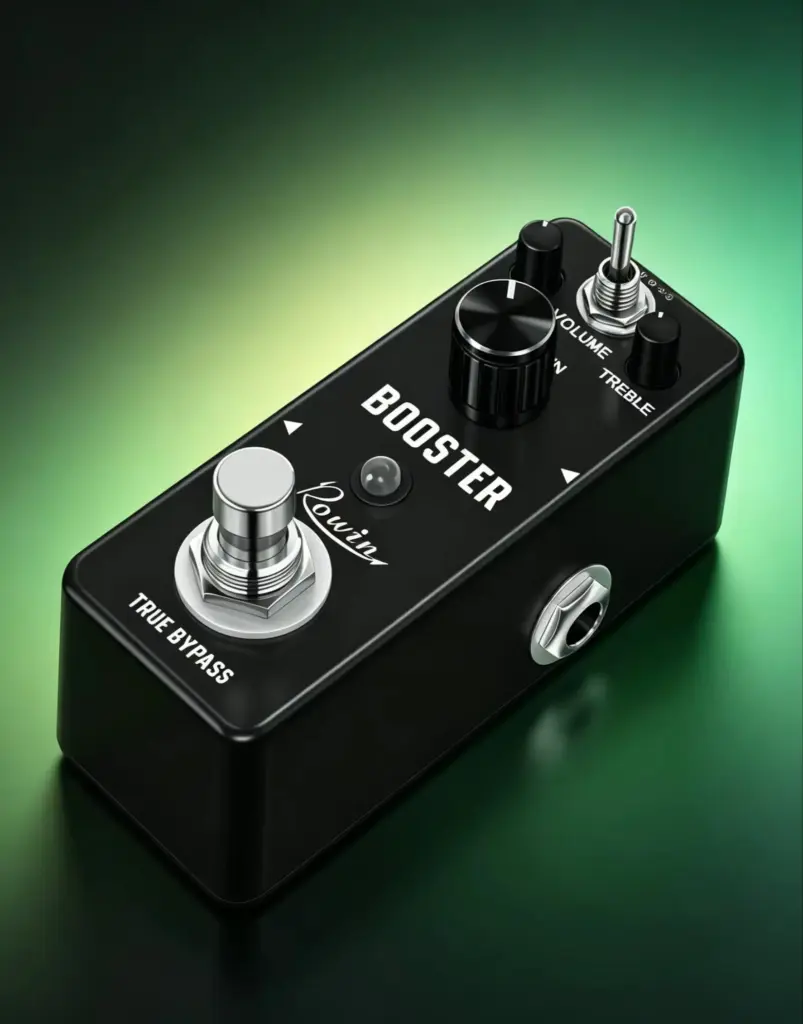
A boost raises signal level without deliberately creating a new effect waveform. Clean boosts emphasise level and headroom, while coloured boosts reshape bass, midrange or treble and may add mild clipping at higher settings. Placed before a gain stage, the extra level changes how that stage distorts; placed later, it can provide a volume lift if sufficient headroom remains.
Guitar pedals are compact effects units that shape and enhance a guitar’s sound, sitting between the instrument and the amplifier. They include gain pedals like overdrive and distortion, modulation effects such as chorus and tremolo, time-based effects like delay and reverb, and essential utilities including tuners, compressors and loopers. Understanding basic things such as pedal type, signal order, power requirements and intended use helps players choose pedals that suit their style, setup and playing environment.
More Gear like this
Analogue equipment uses continuous electrical signals rather than digital processing to shape and produce sound. In music gear, analogue circuits are found in pedals, amplifiers, and effects that rely on physical components such as transistors, valves, resistors, and capacitors.
Analogue sound is often described as warm, organic, and responsive, with natural saturation and subtle imperfections that react to playing dynamics. It is valued for its feel and character, particularly in overdrive, fuzz, modulation, and classic effects where musical interaction is more important than precision.
EQ, or equalisation, is used to shape the tonal balance of a sound by boosting or cutting specific frequency ranges. Common controls include bass, mid, and treble, or more detailed bands that allow precise adjustment of problem areas or tonal character.
EQ is an essential tool in guitar rigs, recording, and live sound, helping instruments sit properly in a mix and sound clear without unwanted harshness or muddiness. It can be used subtly to refine tone or more aggressively to dramatically reshape a sound.
Guitar pedals alter, route, control or support an instrument signal from the floor. The tag covers individual effects, multi-effects, switching, tuning, looping, amplification and pedalboard utilities. The product category and additional effect tags identify the specific job each pedal performs.
Mini guitars use a reduced body, scale length or overall format for younger players, travel or compact practice. They are not all the same size, so compare scale length, nut width, tuning, construction and whether the instrument is a true short-scale design or a smaller interpretation of a full-size model.
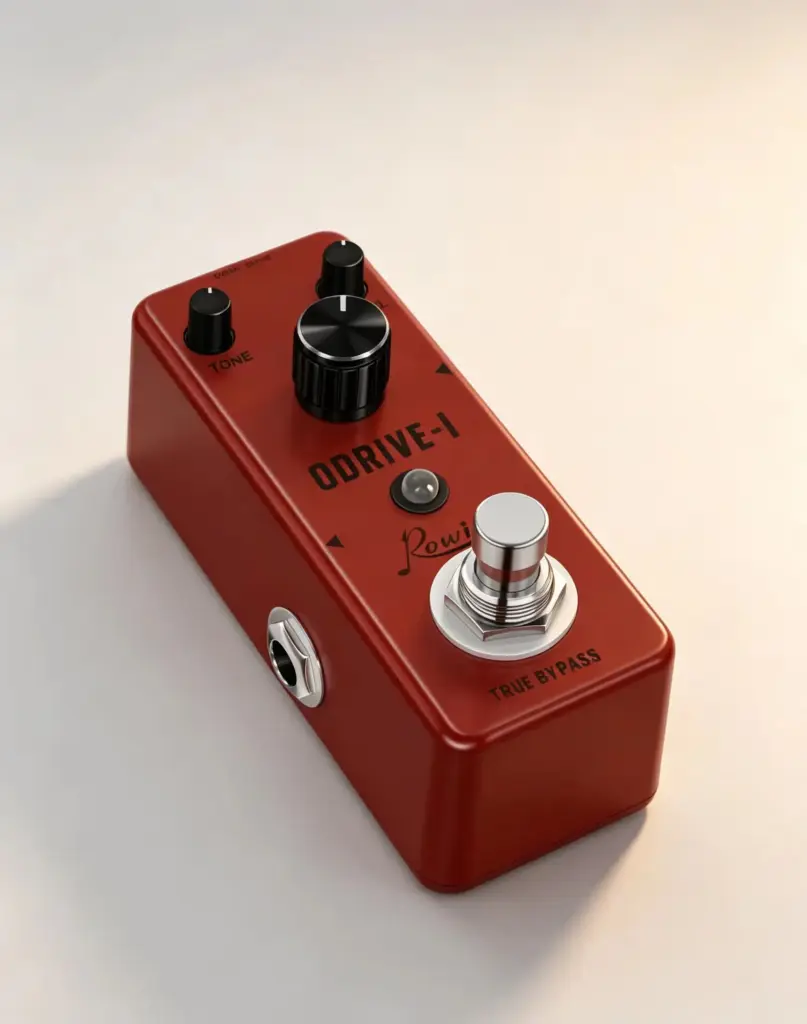
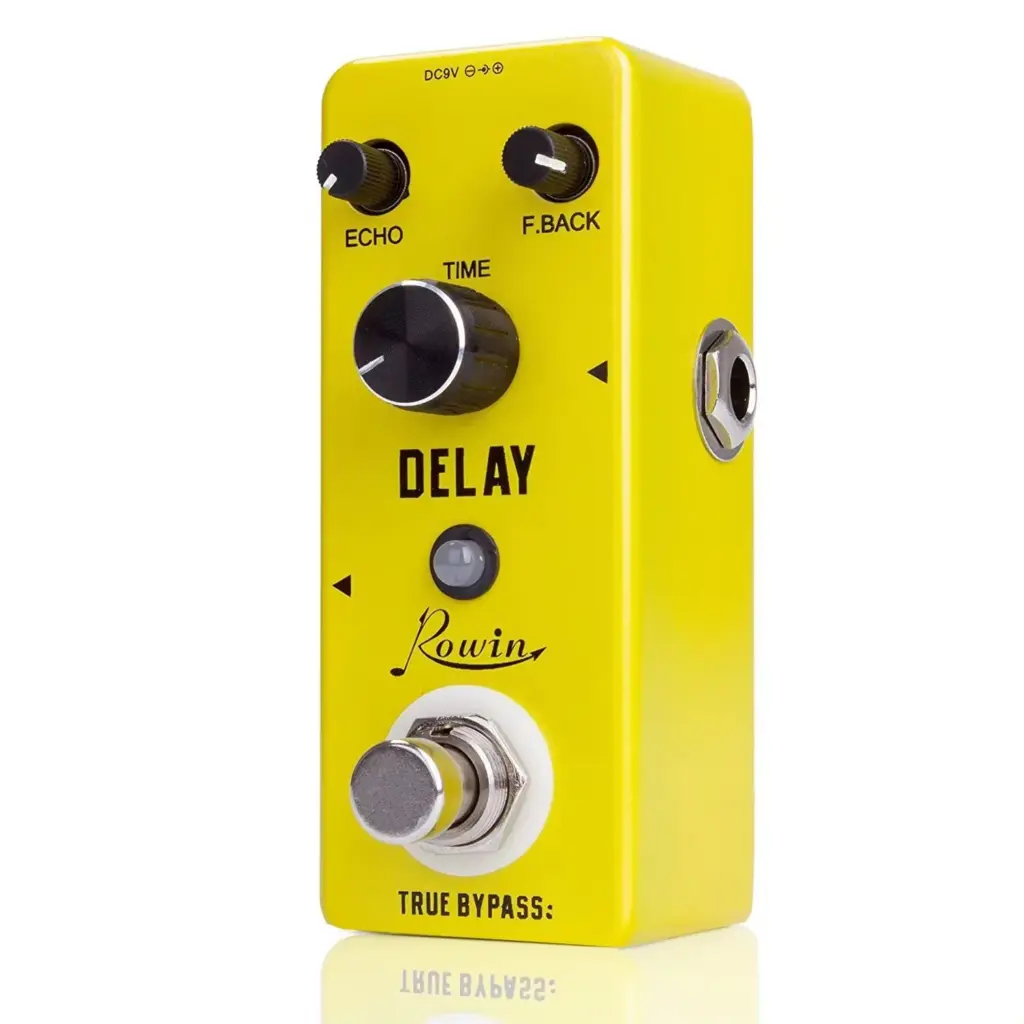
Connects input directly to output through mechanical or relay switching when the effect is off, removing the active circuit from the audio path. It avoids buffer colour but leaves cable capacitance and switching design to influence high-frequency loss and possible switching noise.