


Crazy Tube Circuits Rapture Overdrive Pedal

As an affiliate partner, we may earn a small commission when you buy through our links — at no extra cost to you.

£189.99

This is a New Crazy Tube Circuits Rapture Overdrive Pedal from Crazy Tube Circuits, available in the Guitar Pedals category on Guitars Pedals Amps and Stuff. Read More below to get the latest prices, demos and how to order for UK delivery.

Description

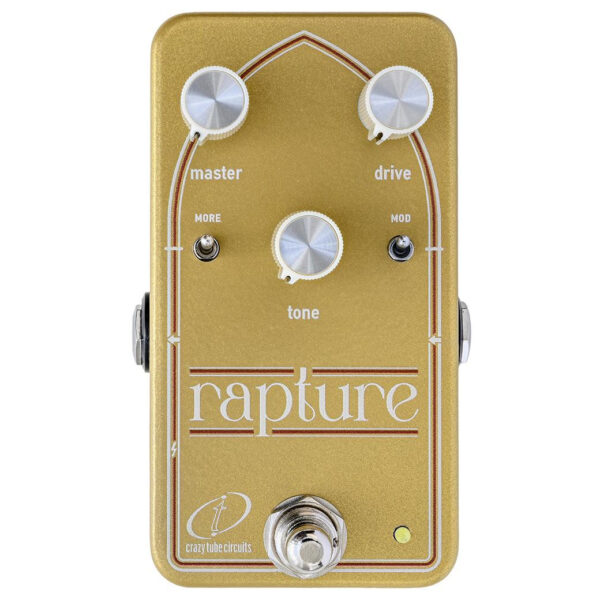
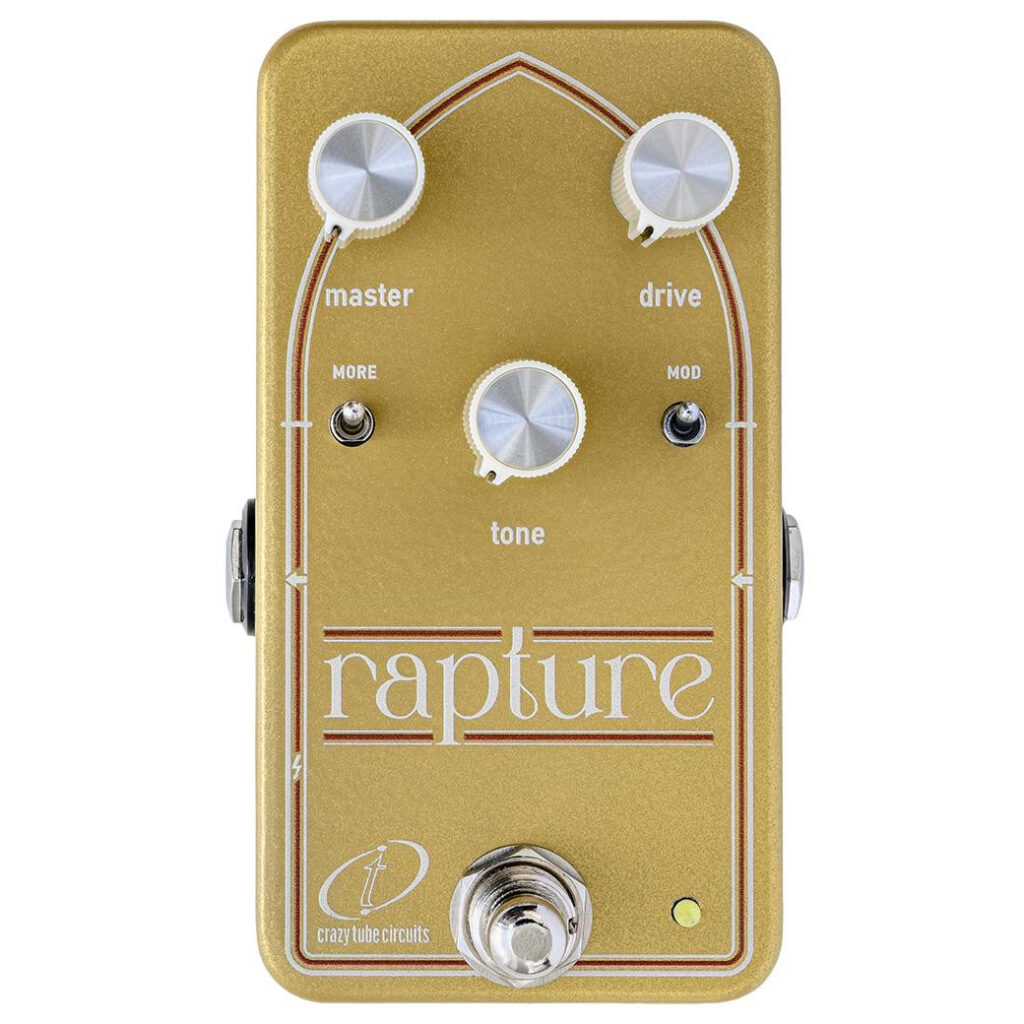
If you liked the drive section of Crazy Tube Circuits’ Triptychon, you’ll feel right at home with the Rapture. Taking that amp-inspired foundation and turning it into a dedicated overdrive pedal, Rapture captures everything players love about a great valve amp pushed into its sweet spot. We’re talking a touch-sensitive response, rich harmonics, natural compression and a smooth transition from clean tones into satisfying breakup. And with an expanded set of controls, you can really fine-tune your sound. More gain, more character The straightforward three-knob layout makes it easy to dial in your ideal tone. Drive controls everything from subtle warmth to full-bodied overdrive, while Tone lets you shape the pedal’s voice without masking the natural character of your guitar and amp. A dedicated Master control gives you plenty of output on tap too, whether you’re after a transparent volume lift or want to hit the front end of your amp a little harder. Find your perfect feel Where the Rapture really shines is its pair of interactive toggle switches. More increases the available gain range, while Mod alters the clipping characteristics for a more open, less compressed response that feels closer to a tube amp running near the edge of clean headroom. Mix and match the two switches alongside the Drive control to explore different levels of headroom, saturation and playing feel. Prefer the original Triptychon drive sound? Simply leave both switches in their down positions.Key Features Triptychon drive circuit in a compact pedal format: Delivers the complete amp-inspired drive section from the Crazy Tube Circuits Triptychon, now as a standalone pedal with extra tonal flexibility. Authentic low-to-medium gain overdrive: Designed to capture the response of a valve amp working hard in its sweet spot. Expect natural compression, rich harmonic character and smooth breakup. Stacks brilliantly with boosts and fuzz pedals: Whether you’re pushing the front end with a boost or pairing it with your favourite fuzz, Rapture plays nicely with other gain pedals for expanded tonal possibilities. Simple but powerful three-knob control set: Fine-tune your sound with dedicated Drive, Tone and Master controls. From subtle edge-of-breakup textures to punchy overdrive tones, it’s easy to dial in exactly what you need. More toggle switch: Unlocks additional gain and saturation when you need it. Great for moving from a transparent foundation drive to a thicker, more driven sound. Mod toggle switch: Changes the clipping response for a more open, less compressed feel. Ideal for players who want extra headroom and a playing experience that feels closer to a cranked tube amp. Relay-based true bypass switching: A high-quality relay switching system keeps your signal path clean when the pedal is bypassed, while the soft-click footswitch ensures smooth and reliable operation. Specifications True bypass switching via high-quality relay Power supply: 9-18V DC, 2.1 mm x 5.5 mm, centre negative (PSU not included) Current consumption: 50 mA minimum Dimensions: 112 x 67 x 50 mm Weight: 0.25 kg

About the manufacturer

Crazy Tube Circuits

Crazy Tube Circuits is a guitar-effects maker. The current GPAS selection includes HI POWER Dual Channel Amplifier & Overdrive, Unobtanium RAW Dual Channel Amplifier Overdrive and Super Conductor Multi-Mode Analogue Boost and covers overdrive pedals, boost pedals, delay pedals and phaser pedals. The model name matters because each effect has a different job in a rig.

For these products, compare effect function, control range, switching, bypass or routing, power requirements and the intended guitar or bass role. The product page is the authority for exact circuitry, connections, condition and included items.

More info about this Product

Guitar Pedals

Guitar pedals are compact effects units that shape and enhance a guitar’s sound, sitting between the instrument and the amplifier. They include gain pedals like overdrive and distortion, modulation effects such as chorus and tremolo, time-based effects like delay and reverb, and essential utilities including tuners, compressors and loopers. Understanding basic things such as pedal type, signal order, power requirements and intended use helps players choose pedals that suit their style, setup and playing environment.

Overdrive Pedals

Overdrive uses soft or moderate clipping to add harmonics and compression while retaining more of the original note shape than heavy distortion. Some circuits emphasise the midrange and trim bass before clipping; others remain broad, transparent or amplifier-like. Gain, clipping arrangement, headroom and tone filtering decide whether it supplies a light edge, a saturated drive sound or extra push into another gain stage.

More Gear like this

Guitar Pedal

Guitar pedals alter, route, control or support an instrument signal from the floor. The tag covers individual effects, multi-effects, switching, tuning, looping, amplification and pedalboard utilities. The product category and additional effect tags identify the specific job each pedal performs.

Overdrive

Overdrive pedals add warmth, grit, and natural compression to your tone, capturing the feel of a pushed tube amp. They respond dynamically to your playing, offering everything from a light bluesy crunch to full, saturated rock tones. Perfect for boosting solos or shaping your core sound, an overdrive pedal brings character and life to any setup. Whether you prefer vintage smoothness or modern bite, these pedals are essential for players who want expressive, touch-sensitive drive with plenty of personality.

Valve Amp

Valve amplifiers use vacuum tubes in part or all of the amplification path. Their response depends on circuit design, output stage, speaker load and operating level rather than valve technology alone. Compare power, channel structure, master volume, attenuation, speaker outputs and maintenance requirements.