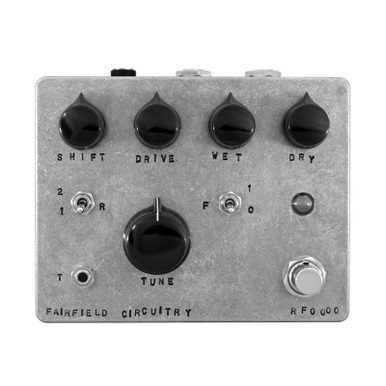
Fairfield Circuitry 900 About Nine Hundred Fuzz Pedal

£219.00

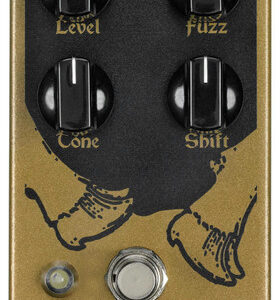
The Fairfield Guitar Pedals always come out on top. This is New is in stock and ready to post out to you, with fast, reliable delivery straight to your door. For more New Guitar Pedals options, read on for full specifications, demos, and secure online ordering. Here's what Fairfield Circuitry have to say: The ~900 is a ferocious fuzz pedal featuring two cascading JFET gain stages. The ~900 is a spiritual successor to our discontinued Four Eyes Fuzz, having a similar fuzz circuit. This pedal has a very wide range of gain, brought to you by four interactive controls: INPUT, FUZZ, BIAS,…

More Details

View more in
Tags: ,
View more by

As an affiliate partner, we may earn a small commission when you buy through our links — at no extra cost to you.


Description

The Fairfield Guitar Pedals always come out on top. This is New is in stock and ready to post out to you, with fast, reliable delivery straight to your door. For more New Guitar Pedals options, read on for full specifications, demos, and secure online ordering.

Here's what Fairfield Circuitry have to say:

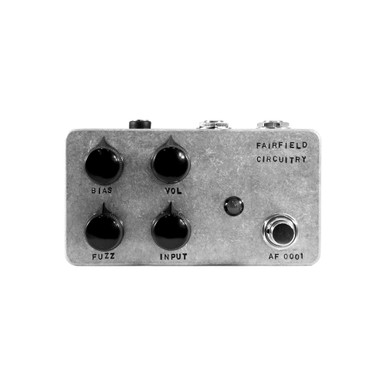
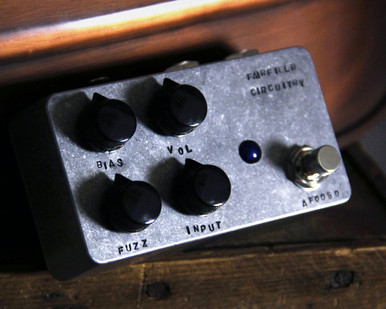
The ~900 is a ferocious fuzz pedal featuring two cascading JFET gain stages. The ~900 is a spiritual successor to our discontinued Four Eyes Fuzz, having a similar fuzz circuit. This pedal has a very wide range of gain, brought to you by four interactive controls: INPUT, FUZZ, BIAS, VOLUME.

The INPUT section is a 'mu-amp' design. The INPUT knob controls the level going into this first gain stage – you can go from clean with lots of headroom, to
completely slammed and distorted – and everything in between. The FUZZ knob controls the level going into the second JFET gain stage. This section is very dependent on the level of the INPUT.

The BIAS knob adjusts the bias of the second gain stage. This gives control over the saturation symmetry, and can also allow gating when turned up high enough. The BIAS knob is especially interactive with the FUZZ knob. The VOLUME controls the master volume output. This pedal has a lot of gain to offer and can get quite loud.

The ~900 is an overall very versatile fuzz pedal. It stacks well with other pedals and is friendly to all sorts of instruments and signal levels. The INPUT especially will dictate how the pedal responds. At lower INPUT levels, the FUZZ will have a wide range of tones and interact heavily with the BIAS knob. When the INPUT is raised high, the FUZZ and BIAS will be a bit less responsive – but at that point you will be experiencing a thick wall of distortion/fuzz

Specifications:

  • INPUT – preamp input level
  • FUZZ – interstage level
  • BIAS – second stage bias and gain
  • VOLUME – output level

Additional information

Weight 0.5 kg

Stuff About Guitar Pedals

Guitar pedals are compact effects units that shape and enhance a guitar’s sound, sitting between the instrument and the amplifier. They include gain pedals like overdrive and distortion, modulation effects such as chorus and tremolo, time-based effects like delay and reverb, and essential utilities including tuners, compressors and loopers. Understanding basic things such as pedal type, signal order, power requirements and intended use helps players choose pedals that suit their style, setup and playing environment.

The Important stuff

Fuzz — Fuzz is one of the earliest and most distinctive guitar effects, known for its thick, gritty, and saturated tone that completely transforms your sound. It works by heavily clipping the audio signal, producing a raw, almost broken distortion that defined the sound of the ’60s and ’70s rock era. Classic pedals like the Fuzz Face and Big Muff became legendary for their roaring sustain and rich harmonic texture. Modern fuzz pedals range from vintage-style warmth to wild, synth-like chaos, making them perfect for players who want to add character, attitude, and a touch of chaos to their tone.. Pedal — Pedals are the tools that let you shape, colour and transform your sound, from subtle tone enhancement to bold, creative effects. Whether you are adding grit, space, movement or control, a pedal becomes part of your playing rather than just an add-on. Exploring different pedals is about discovering what responds to your touch and helps your sound feel more like your own..