


Description
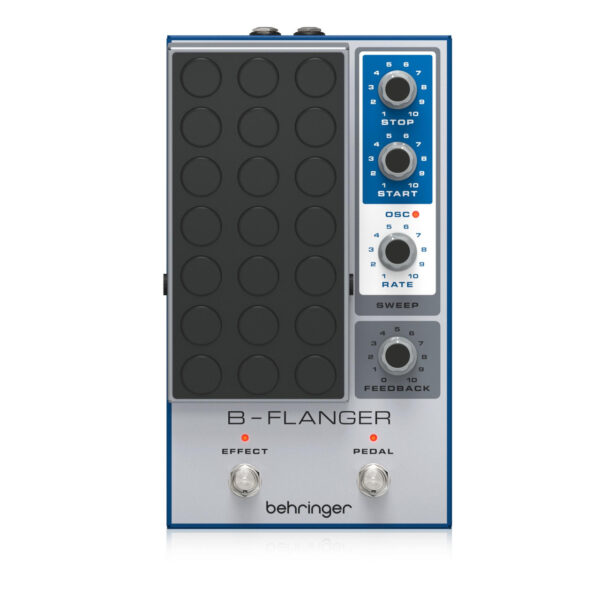
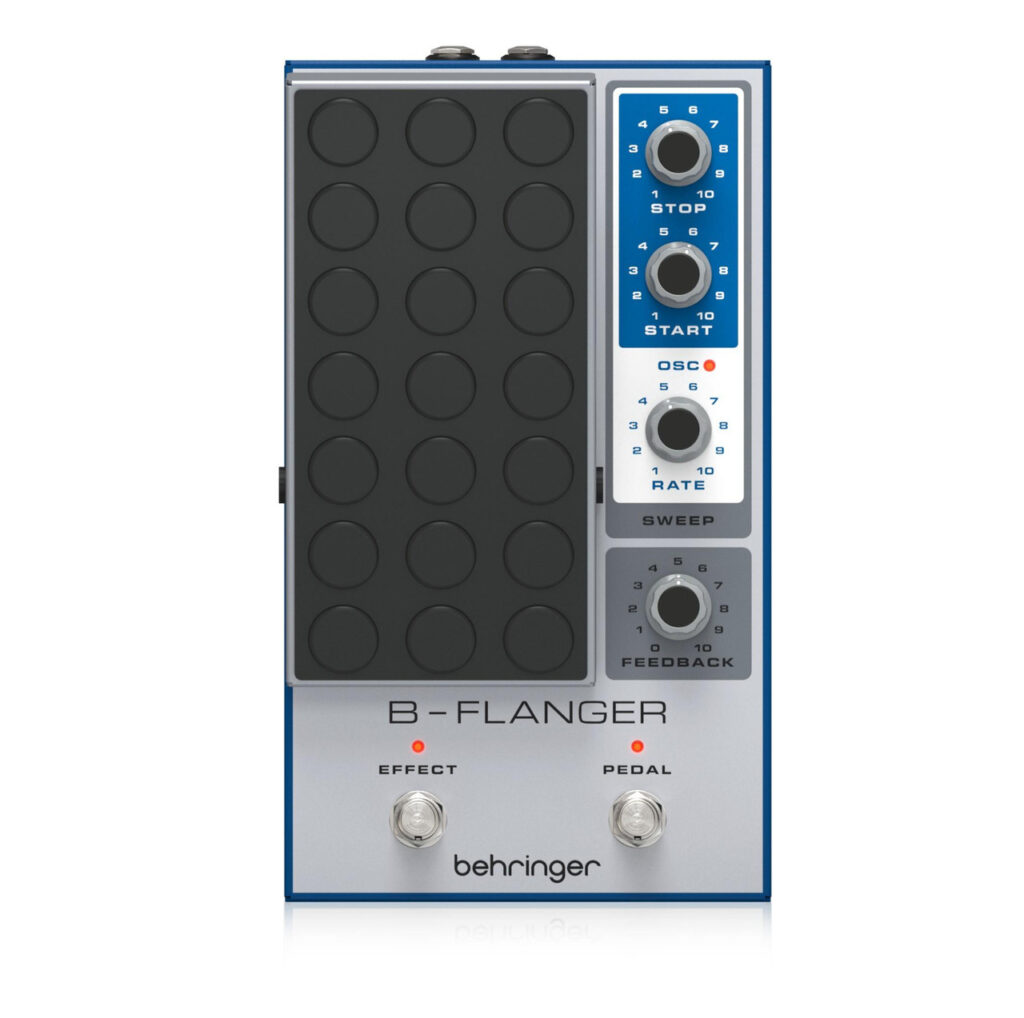
The Behringer B-Flanger is a vintage-inspired flanger pedal built around a true analogue BBD circuit, delivering those classic 70s jet-plane sweeps, metallic shimmer and vocal-like modulation that defined countless rock and funk records. With versatile controls, an integrated optical foot pedal and true bypass switching, it gives you studio-style flanging and expressive live control in a single, gig-ready box. From subtle movement that fattens clean chords to wild, resonant sweeps that cut through a dense mix, B-Flanger is designed to slot straight onto your board and into your sound. The onboard LFO can be dialled from glacially slow to vibrato-fast, while the feedback control lets you push the effect from smooth and spacious to intense and almost synth-like. When you want to take over the sweep yourself, the optical foot pedal steps in for hands-free, on-the-fly modulation. Authentic Analogue BBD Tone At the heart of B-Flanger is a genuine analogue bucket-brigade device circuit, voiced to recreate the rich, organic modulation of classic 70s flangers. This gives your sound a natural, musical movement that digital algorithms struggle to match, with warm top-end roll-off and a three-dimensional feel that flatters both clean and driven tones. Versatile Modulation Control B-Flanger offers precise control over oscillator sweep, LFO rate and feedback intensity, so you can sculpt everything from gentle chorus-like thickening to dramatic, swooshing sweeps. Whether you are after a slow, spacious wash for ambient parts or a tight, fast wobble for solos and riffs, the pedal responds quickly and predictably to your tweaks. Integrated Optical Foot Pedal The built-in optical foot pedal lets you manually ride the flange sweep in real time, opening up expressive, wah-like modulation effects that track your playing dynamics. This is ideal for intros, breakdowns and sound-design moments where you want the movement to follow your foot rather than a fixed LFO. True Bypass and Road-Ready Design With true bypass switching, B-Flanger keeps your core tone intact when the effect is disengaged, maintaining clarity and signal integrity across your pedalboard. The robust housing and vintage styling make it a practical, characterful addition to any rig, ready for regular rehearsals and live shows. Key Features All Analogue BBD Flanger Circuit – The genuine bucket-brigade design delivers the lush, organic modulation associated with classic 70s flangers, giving your sound depth, movement and a musical warmth that sits beautifully in a mix. Flexible LFO and Feedback Controls – Dedicated controls for oscillator sweep, LFO rate and feedback intensity let you fine-tune the character of the effect, from subtle doubling and chorus-like textures through to dramatic, resonant sweeps. Integrated Optical Foot Pedal – The onboard optical pedal allows you to control the flange sweep with your foot during performance, enabling expressive, manual modulation that can be more dynamic and interactive than a fixed-rate LFO. True Bypass and Vintage Styling – True bypass switching preserves your dry tone when the pedal is off, while the sturdy, retro-styled enclosure ensures the B-Flanger looks the part on your board and stands up to regular gigging. SpecificationsGeneral Effect Type: Analogue flanger Circuit Type: Bucket-brigade device (BBD) Bypass: True bypass Controls Oscillator Sweep Control LFO Rate Control Feedback Intensity Control Integrated Optical Foot Pedal for Manual Flange Sweep Pedal Footswitch to Toggle Sweep Source (Oscillator / Optical Foot Pedal) Construction Housing: Robust enclosure with vintage styling