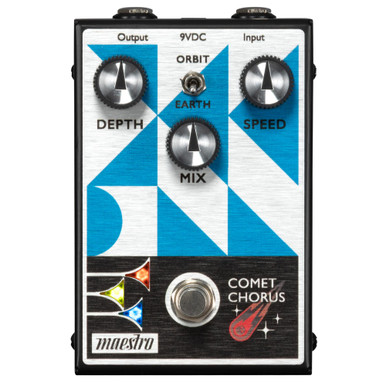
Maestro Fuzz-Tone FZ-M Pedal

£154.99

The Maestro Guitar Pedals always come out on top. This is New is in stock and ready to post out to you, with fast, reliable delivery straight to your door. For more New Guitar Pedals options, read on for full specifications, demos, and secure online ordering. Maestro created the world’s first fuzz pedal, the Maestro Fuzz-Tone FZ-1. Introduced in 1962, the Fuzz-Tone became the sound of rock and roll and a must-have accessory for guitarists everywhere after the success of 1965’s “(I Can’t Get No) Satisfaction” by The Rolling Stones, which prominently featured its cutting-edge sound. Maestro has brought the…

More Details

View more in
Tags:
View more by

As an affiliate partner, we may earn a small commission when you buy through our links — at no extra cost to you.


Description

The Maestro Guitar Pedals always come out on top. This is New is in stock and ready to post out to you, with fast, reliable delivery straight to your door. For more New Guitar Pedals options, read on for full specifications, demos, and secure online ordering.

Maestro created the world’s first fuzz pedal, the Maestro Fuzz-Tone FZ-1. Introduced in 1962, the Fuzz-Tone became the sound of rock and roll and a must-have accessory for guitarists everywhere after the success of 1965’s “(I Can’t Get No) Satisfaction” by The Rolling Stones, which prominently featured its cutting-edge sound. Maestro has brought the fun and sonic fury of those early Fuzz-Tones back with their Fuzz-Tone FZ-M.

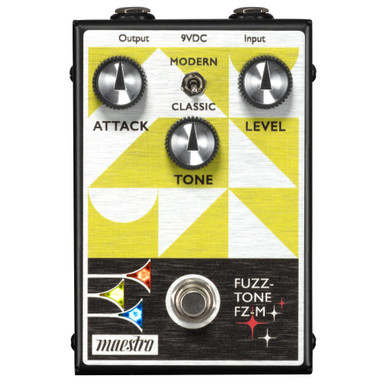
This all-analogue pedal boasts a Mode toggle switch that provides two-pedals-in-one functionality for increased sonic versatility, with both an FZ-1 inspired fuzz sound and a thicker, more modern fuzz tone. Its 3-knob control layout gives you intuitive control. The Attack knob controls the amount of fuzz. The Tone control lets you adjust the timbre from bright and raspy to warm and wooly, and anywhere in between. Then use the Level control to set the output volume (it can go way beyond unity gain when desired).

Key Features

  • Controls: Attack, Tone and Level.
  • Switches: True Bypass footswitch and Modern/Classic Mode toggle switch.
  • LED Indicators: Red, yellow and blue bugles in the Maestro logo illuminate when the pedal is active.

Specifications

  • Signal Processing: All-analogue
  • Power Requirements: 9V battery or regulated 9V DC power supply (5.5 x 2.1 mm plug, wired centre-negative)
  • Current Draw: 21 mA
  • Input Impedance: 32 kOhms
  • Output Impedance: 5 kOhms
  • Switching: True Bypass
  • Dimensions (D x W x H): 5.04” x 3.45” x 2.50” (128 x 87.6 x 63.5 mm)
  • Weight: 1.23 lb.

Additional information

Weight 0.5 kg

Stuff About Guitar Pedals

Guitar pedals are compact effects units that shape and enhance a guitar’s sound, sitting between the instrument and the amplifier. They include gain pedals like overdrive and distortion, modulation effects such as chorus and tremolo, time-based effects like delay and reverb, and essential utilities including tuners, compressors and loopers. Understanding basic things such as pedal type, signal order, power requirements and intended use helps players choose pedals that suit their style, setup and playing environment.

The Important stuff

Pedal — Pedals are the tools that let you shape, colour and transform your sound, from subtle tone enhancement to bold, creative effects. Whether you are adding grit, space, movement or control, a pedal becomes part of your playing rather than just an add-on. Exploring different pedals is about discovering what responds to your touch and helps your sound feel more like your own..

Related gear

Available for Amazon Prime