About the manufacturer
Way Huge are known for making standout effects pedals and more. Founded with a passion for tone and innovation, their gear has shaped countless records and players’ sounds. Look out for their iconic designs and flagship models — they’ve earned a reputation for reliability and creativity.
More info about this Product
Guitar pedals are compact effects units that shape and enhance a guitar’s sound, sitting between the instrument and the amplifier. They include gain pedals like overdrive and distortion, modulation effects such as chorus and tremolo, time-based effects like delay and reverb, and essential utilities including tuners, compressors and loopers. Understanding basic things such as pedal type, signal order, power requirements and intended use helps players choose pedals that suit their style, setup and playing environment.
More Gear like this
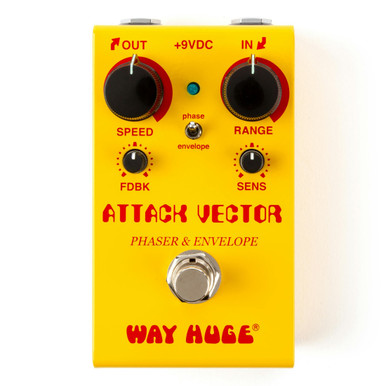
Envelope effects respond dynamically to how hard or softly you play, shaping the sound based on the input signal rather than a fixed control. The effect opens and closes in real time, creating tonal changes that follow your picking or playing dynamics.
They are most commonly associated with envelope filters and auto-wah effects, producing expressive, vocal-like sweeps that react to touch and groove. Envelope effects are widely used in funk, jam, electronic, and experimental music, where rhythmic feel and player interaction are central to the sound.
Pedals are the tools that let you shape, colour and transform your sound, from subtle tone enhancement to bold, creative effects. Whether you are adding grit, space, movement or control, a pedal becomes part of your playing rather than just an add-on. Exploring different pedals is about discovering what responds to your touch and helps your sound feel more like your own.
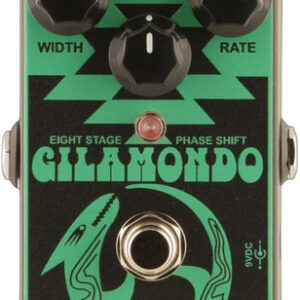
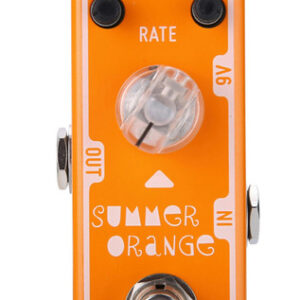
Phaser is a modulation effect that creates a smooth, swirling sound by splitting the signal and shifting the phase of one path before mixing it back with the original. As the phase shift is modulated, it produces moving peaks and dips in the frequency response, giving the effect its characteristic sweep.
It is commonly used to add movement and texture to guitars, keyboards, and other instruments, ranging from subtle and warm to deep and psychedelic. Phaser effects are strongly associated with classic funk, rock, and 1970s tones, but remain widely used in modern music for their fluid, musical character.